Soybean oil price
Soybean oil currently trades at US$0.6835 per pound (≈ €0.6110 · £0.5175) — 11.03% below the 12-month high. Over the past 12 months the price has gained 32.62%, with the annual range running from US$0.4784 to US$0.7682. In the past 24 hours the price has risen by 0.65%.


Invest in commodity ETFs from just $50
Gold, oil and even whole commodity sectors through ETFs, all in one account, kept simple.
eToro is a multi-asset investment platform. The value of your investments may go up or down. Your capital is at risk.
Soybean oil chart
Interactive chart and 30-day overview
The Soybean oil chart shows how the soybean oil price has moved over time. The interactive view lets you switch the timeframe (from 7 days up to MAX), the currency (USD / EUR / GBP) and overlay moving averages. Click any two points to measure the percentage change between those dates.
How is soybean oil priced?
What drives the price of soybean oil?
Demand for biodiesel and renewable diesel is the main long-term price driver in soybean oil. In the United States, the Renewable Fuel Standard (RFS) biomass-based diesel category, linked to D4 RINs, sets blending obligations that have increased over time. Expansion in renewable diesel capacity also raises feedstock demand, as renewable diesel can be handled within petroleum-refining infrastructure, unlike conventional biodiesel. In the EU, the RED III renewable energy directive and FAME blending obligations put soybean oil in competition with rapeseed oil and used cooking oil (UCO). The EPA publishes monthly data on RIN generation and compliance, and relevant regulatory announcements can move the CBOT ZL contract.
Palm oil substitution is the most important short-term competitive factor for soybean oil. The four main global vegetable oils — palm oil (~80 million tonnes of annual production), soybean oil (~60 million tonnes), rapeseed oil (~32 million tonnes) and sunflower oil (~22 million tonnes) — are interchangeable across much of the bakery, edible-oil and biodiesel markets. Indonesia and Malaysia account for more than 85% of global palm oil output. Indonesia’s B35 / B40 biodiesel blending rules, Malaysian export quotas and Bursa Malaysia FCPO (Crude Palm Oil Futures) prices feed directly into Chicago soybean oil pricing. When the palm oil premium narrows, processors switch to palm oil; when it widens, demand for soybean oil strengthens.
Chinese edible-oil demand and the economics of the crush margin complete the main set of market drivers. China is the world’s largest soybean importer, bringing in about 100 million tonnes of soybeans a year, mainly from Brazil and the US. Imported beans are crushed in domestic plants, so most of China’s soybean oil and soybean meal is produced locally; nevertheless, Chinese processing margins and state stock policies have a material impact on the global market. Prices are shaped by the global soybean crop — about ~400 Mt a year under USDA WASDE estimates, including Brazil at ~155 Mt, the US at ~115 Mt and Argentina at ~50 Mt — and by processors’ crush margins. A processor raises crushing volumes when the combined sale price of soybean oil and soybean meal is sufficiently above the purchase price of soybeans. That directly controls how much soybean oil reaches the market.
How to invest in soybean oil
Investors can access the soybean oil market without taking physical delivery through exchange-traded futures contracts, mainly CBOT Soybean Oil Futures under the ZL ticker; CFDs on soybean oil prices, often listed as SOYOIL, with more limited liquidity; and shares of major oilseed-crushing companies such as Archer Daniels Midland (ADM), Bunge (BG) and Singapore-listed Wilmar International (F34.SI). Futures and soybean oil CFDs provide the most direct commodity exposure. Agribusiness equities are more indirect and carry company-specific risks across the oilseed crush value chain. Examples of regulated brokers offering soybean oil CFDs and agribusiness shares include:
30-day price history
Chart and daily closing prices
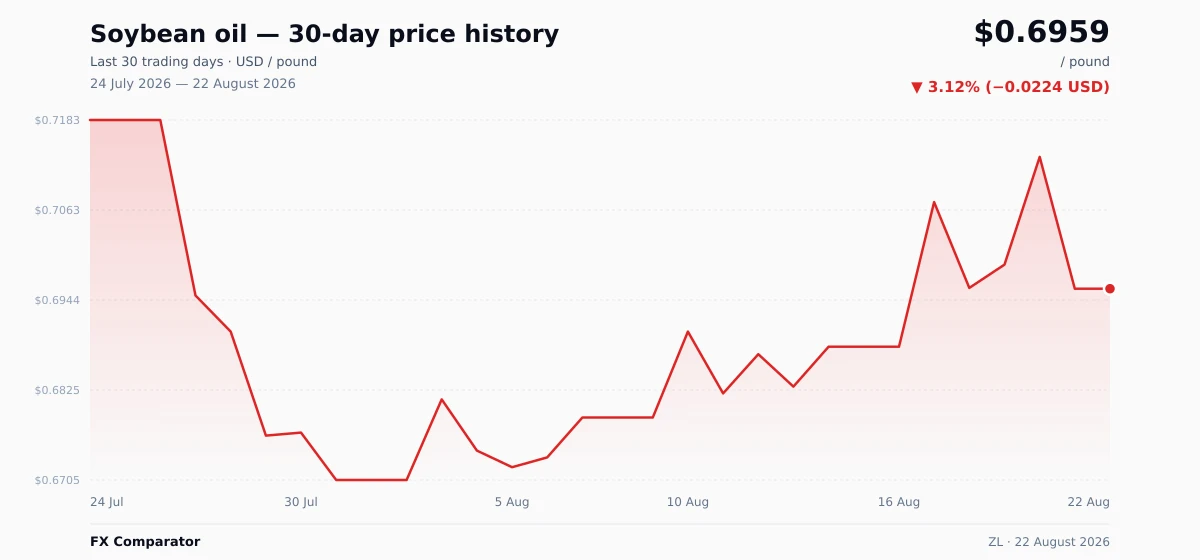
Download chart: WebP
Daily close
22 trading days
| Date | Price (USD) | Price (EUR) | Price (GBP) | Daily change |
|---|---|---|---|---|
| 8 Oct 2026 | US$0.6835 | €0.6110 | £0.5175 | ▲ +0.65% |
| 7 Oct 2026 | US$0.6791 | €0.6071 | £0.5142 | ▼ −3.10% |
| 6 Oct 2026 | US$0.7008 | €0.6265 | £0.5306 | ▲ +0.79% |
| 5 Oct 2026 | US$0.6953 | €0.6216 | £0.5265 | ▲ +1.03% |
| 2 Oct 2026 | US$0.6882 | €0.6152 | £0.5211 | ▲ +1.88% |
| 1 Oct 2026 | US$0.6755 | €0.6039 | £0.5115 | ▼ −1.33% |
| 30 Sept 2026 | US$0.6846 | €0.6120 | £0.5184 | ▲ +0.10% |
| 29 Sept 2026 | US$0.6839 | €0.6114 | £0.5178 | ▲ +0.93% |
| 28 Sept 2026 | US$0.6776 | €0.6058 | £0.5131 | ▼ −0.28% |
| 25 Sept 2026 | US$0.6795 | €0.6075 | £0.5145 | ▲ +0.47% |
| 24 Sept 2026 | US$0.6763 | €0.6046 | £0.5121 | ▼ −0.37% |
| 23 Sept 2026 | US$0.6788 | €0.6068 | £0.5140 | ▼ −0.26% |
| 22 Sept 2026 | US$0.6806 | €0.6084 | £0.5153 | ▼ −1.29% |
| 21 Sept 2026 | US$0.6895 | €0.6164 | £0.5221 | ▲ +0.95% |
| 18 Sept 2026 | US$0.6830 | €0.6106 | £0.5172 | ▼ −1.30% |
| 17 Sept 2026 | US$0.6920 | €0.6186 | £0.5240 | ▼ −0.66% |
| 16 Sept 2026 | US$0.6966 | €0.6227 | £0.5275 | ▼ −1.05% |
| 15 Sept 2026 | US$0.7040 | €0.6294 | £0.5331 | ▲ +0.13% |
| 14 Sept 2026 | US$0.7031 | €0.6286 | £0.5324 | ▲ +0.77% |
| 11 Sept 2026 | US$0.6977 | €0.6237 | £0.5283 | ▼ −3.26% |
| 10 Sept 2026 | US$0.7212 | €0.6447 | £0.5461 | ▲ +1.97% |
| 9 Sept 2026 | US$0.7073 | €0.6323 | £0.5356 | — |