How to Make Profits from Forex Trading: Realistic Strategies That Work

Roughly 70-80% of retail forex traders lose money, according to data published by regulated brokers across Europe and Australia. That statistic has barely changed in over a decade. But the remaining 20-30% do earn consistent returns, and they share a set of habits that have nothing to do with secret indicators or magic formulas.

Profiting from forex comes down to three pillars: a tested strategy, disciplined risk management, and the psychological control to follow both when real money is at stake.

Start With a Strategy That Has an Edge

An "edge" means your strategy wins more than it loses over a large sample of trades, or its winners are significantly larger than its losers, or both. Without an edge, you are gambling with extra steps.

You do not need a complex system. Some of the most durable approaches include:

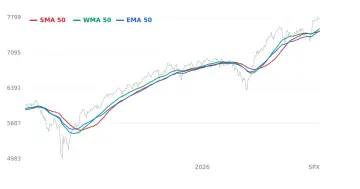
Trend following. Identify the prevailing trend on the daily chart using a 50-period and 200-period moving average. Trade only in the direction of the trend on lower timeframes. This approach works because institutional money tends to push trends further than retail traders expect.

Support and resistance breakouts. Mark horizontal levels where price has reversed at least twice. When price breaks through with above-average volume, enter in the breakout direction with a stop loss just behind the level. In our experience, breakouts on the London open (08:00 GMT) and US open (13:30 GMT) produce the cleanest follow-through.

Mean reversion on ranges. Some pairs, particularly EUR/CHF and EUR/GBP, spend extended periods in well-defined ranges. Buying near support and selling near resistance, with tight stops outside the range, can produce a high win rate.

Whatever strategy you choose, test it on at least 100 historical trades before risking real capital. Most platforms offer backtesting tools. If you cannot prove the edge exists in historical data, it probably does not exist in live trading either.

Risk Management Is the Actual Profit Engine

Here is a truth that surprises new traders: your win rate matters far less than your risk-to-reward ratio. A strategy that wins only 40% of the time can be highly profitable if your average winner is 2.5 times larger than your average loser.

The math is straightforward. Assume 100 trades with a 40% win rate and a 1:2.5 risk-to-reward ratio:

That same 100-trade sample with a 60% win rate but 1:0.8 risk-to-reward:

The second strategy wins more often but makes less money. This is why cutting losers short and letting winners run is not just a cliche. It is the mathematical foundation of profitable trading.

Position Sizing: The Rule That Saves Accounts

Never risk more than 1-2% of your account balance on a single trade. This is not optional. It is the single most important rule in forex.

On a $10,000 account, a 1% risk means your maximum loss per trade is $100. If your stop loss is 50 pips away, your position size should be calculated so that 50 pips of adverse movement equals exactly $100.

For a standard lot (100,000 units) on EUR/USD, one pip equals roughly $10. So a 50-pip stop would require a position size of 0.2 lots ($100 / $10 per pip / 50 pips = 0.2 lots adjusted for the math).

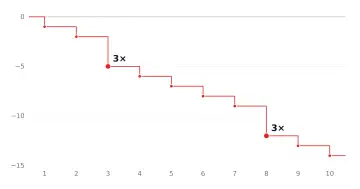
Why 1-2%? Because even a string of 10 consecutive losses, which happens more often than you think, only draws your account down by roughly 10-18%. You can recover from that. A trader risking 10% per trade faces an 65% drawdown after the same losing streak, which is nearly impossible to recover from psychologically or mathematically.

Build a Trade Plan Before You Enter

Every trade should have three components defined before you click buy or sell:

  1. Entry criteria. What specific conditions must be met? Be precise. "Price pulls back to the 50 EMA on the 4-hour chart while the daily trend is bullish and RSI is below 40" is a trade plan. "It looks like it might go up" is not.

  2. Stop loss. Where is the trade invalidated? Place your stop at a level where your thesis is clearly wrong, not at an arbitrary distance. Behind a recent swing low for longs, or above a swing high for shorts.

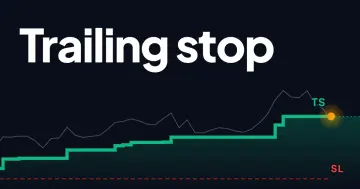
  3. Take profit. Where will you exit with a gain? Use previous support/resistance levels, measured moves, or a trailing stop. Your take profit should be at least 1.5 times your stop loss distance to maintain positive expectancy.

Write this plan down or type it into a trading journal. We have observed that traders who document their plans before entering execute with far more discipline than those who decide in the moment.

The Psychology of Profitable Trading

Technical skill gets you to breakeven. Psychology gets you to profit. Here are the mental traps that destroy accounts:

Revenge trading. You take a loss, feel angry, and immediately enter another trade to "win it back." This trade is almost always larger than your normal size and based on emotion rather than analysis. In our experience, revenge trades account for a disproportionate share of account blowups.

Moving your stop loss. Price approaches your stop, and you move it further away to "give the trade more room." You have just increased your risk beyond your plan and turned a small, manageable loss into a potentially devastating one.

Overtrading. You feel compelled to trade every day, even when no setups match your criteria. The market does not owe you opportunities. Some of the most profitable weeks involve only two or three trades.

Ignoring the plan after a winning streak. Three wins in a row can create a dangerous sense of invincibility. You increase your size, skip your analysis, and give back your profits on the fourth trade.

The solution to all of these is the same: follow the plan, control the size, and accept that losses are a normal cost of doing business.

Choosing the Right Pairs and Sessions

Your profitability depends partly on what you trade and when you trade it. The most traded forex pairs offer the tightest spreads and most predictable behaviour.

EUR/USD and GBP/USD are best traded during the London-New York overlap (13:00-17:00 GMT), when volume peaks and spreads tighten. USD/JPY performs well during the Tokyo session (00:00-09:00 GMT).

Avoid trading during low-liquidity windows like the late New York session (21:00-00:00 GMT) unless your strategy specifically targets those conditions. Spreads widen, and price action becomes erratic.

Keep a Trading Journal

Every professional trader we have spoken with keeps some form of trading journal. At minimum, record:

Review your journal monthly. You will find patterns: maybe you lose consistently on Fridays, or your win rate on GBP pairs is significantly lower than on EUR pairs. These insights let you eliminate leaks and double down on strengths.

Compounding: How Small Gains Become Large Returns

A 3% monthly return sounds modest. But compounding $10,000 at 3% per month produces $14,258 after 12 months, which is a 42.6% annual return. That outperforms most hedge funds.

The key is consistency. You do not need home-run trades. You need a steady edge applied with discipline over hundreds of trades. For more on compounding and growing your forex investments, focus on protecting capital first and letting mathematics do the heavy lifting.

What Profitable Forex Trading Actually Looks Like

Forget the screenshots of $50,000 daily profits on social media. Consistent forex profitability looks boring: small position sizes, careful analysis, frequent small losses, occasional medium wins, and rare large wins.

If you can accept that reality and still find the process rewarding, you have a shot at joining the profitable minority. If you need excitement and fast money, you should honestly consider why forex might not be for you before risking capital you cannot afford to lose.

Profitable trading is a skill. Like any skill, it takes structured practice, honest self-assessment, and time. Most traders who survive their first year with capital intact go on to become consistently profitable. The ones who blow up almost always broke the rules they knew they should follow.