Why Not to Trade Forex: Honest Risks Every Beginner Must Understand
Between 70% and 80% of retail forex accounts lose money. That is not an opinion or a scare tactic. It is a regulatory requirement. Brokers across the EU, UK, and Australia must publish this figure, and the numbers have stayed stubbornly consistent year after year.
Before you deposit a single dollar into a forex account, you deserve an honest look at why most people fail and whether this market is genuinely right for you. If you have already read about why trade forex, consider this the necessary counterpoint.
The Leverage Trap
Leverage is marketed as a benefit. It lets you control $100,000 worth of currency with just $3,333 at 30:1 leverage, or $1,000 at 100:1 in less regulated jurisdictions. That sounds powerful. It is. It is also the number one reason retail traders blow up their accounts.
Here is what leverage actually does: a 1% move against your position at 100:1 leverage wipes out your entire margin. On EUR/USD, a 1% move is roughly 100 pips, which can happen in a single trading session during a volatile news event.
Many new traders open accounts with $500-$2,000 and trade at or near maximum leverage. A single Non-Farm Payrolls release, ECB decision, or geopolitical shock can erase that account in minutes. The January 2015 Swiss franc event, when the SNB removed its EUR/CHF floor, destroyed accounts at every leverage level. Some traders ended up owing their brokers money because prices gapped through their stop losses.
In our experience, the traders who survive their first year almost always use effective leverage below 10:1. That is not exciting, but it is the reality of staying solvent.
The Statistics Are Against You From Day One
The 70-80% loss rate only tells part of the story. Research from French regulator AMF, which tracked 14,799 active forex traders over four years, found that:
- The average loss per trader was approximately 10,900 euros
- 89% of traders lost money over the full study period
- Losses increased as trading volume increased, suggesting that overtrading made things worse
- Only the top 1% of traders earned consistently meaningful returns
A separate study by US-based brokers showed that the median forex account is closed within 90 days. Most people do not just lose money. They lose it quickly.
These statistics do not mean profitable trading is impossible. But they do mean the odds are stacked against you in a way that most marketing materials conveniently ignore.
Psychological Traps That Drain Accounts
Forex attracts people with a specific psychological profile: driven, competitive, and confident enough to bet real money on their analysis. Ironically, these same traits become liabilities in live trading.
Loss aversion. Research by Kahneman and Tversky showed that people feel the pain of a loss roughly twice as intensely as the pleasure of an equivalent gain. In forex, this leads to holding losing trades too long (hoping they recover) and cutting winning trades too early (locking in gains before they evaporate). The result is a pattern where your losers are bigger than your winners, which is the opposite of what profitable trading requires.
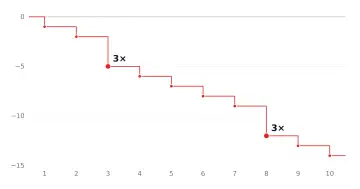
Overconfidence after wins. Three winning trades and your brain convinces you that you have cracked the code. Position sizes increase. Analysis gets sloppy. The fourth trade wipes out the gains from the first three plus more. We have seen this pattern repeat across hundreds of trader accounts.
Revenge trading. After a loss, the emotional urge to immediately take another trade and "win it back" is almost irresistible for many people. Revenge trades are typically larger, less carefully planned, and more likely to fail. They transform a manageable loss into a devastating one.
The sunk cost fallacy. After losing $3,000, many traders deposit another $3,000 thinking they cannot walk away from their initial investment. This cycle can repeat until the losses become life-altering.
If you are prone to emotional decision-making under financial pressure, forex will exploit that weakness relentlessly.
The Cost Structure Works Against Small Accounts
Forex brokers make money through spreads and commissions. On EUR/USD, a typical spread of 1 pip costs $10 per standard lot round trip. That does not sound like much until you calculate the annual impact.
A trader making 5 trades per day at 1 standard lot pays roughly $50 in daily spread costs, or about $1,100 per month. On a $10,000 account, that is 11% of your capital consumed by spreads alone before you make or lose a single pip in profit.
Smaller accounts face an even worse ratio. On a $2,000 account trading mini lots, the spread cost as a percentage of capital is identical, but the margin for error is drastically smaller. One bad week can put you in a hole that takes months to climb out of.
Swap rates (overnight financing charges) add another layer of cost. Holding positions overnight, especially on the wrong side of an interest rate differential, bleeds capital slowly but steadily.
The Information Asymmetry Problem
Retail forex traders compete against central banks, hedge funds, multinational corporations, and algorithmic systems that process information faster than any human can. Institutional traders have:
- Access to order flow data that reveals where large positions are clustered
- Direct relationships with central bank officials and government economists
- Technology that executes trades in microseconds
- Risk management teams, compliance departments, and billions in capital reserves
You are trading on a retail platform with delayed data, wider spreads, and no visibility into the actual order book. This does not make profitable trading impossible, but it means you are fundamentally disadvantaged in ways that no YouTube course will fix.
The Marketing Machine Distorts Reality
Forex is a massive industry. Brokers, course creators, signal providers, and influencers all profit from convincing you to trade. Their incentives are not aligned with yours.
Brokers earn revenue when you trade, regardless of whether you win or lose. Many market-maker brokers profit directly when you lose. Course sellers earn money when you buy their program, not when you become profitable. Signal providers charge monthly subscriptions whether their signals work or not.
Social media compounds the problem. Screenshots of $10,000 daily profits are easy to fabricate. Even legitimate winners rarely show their losing streaks, creating survivorship bias that makes forex look far more profitable than it is for the average participant.
When Forex Is Genuinely Not For You
Be honest with yourself about these disqualifiers:
You need the money. Trading with rent money, emergency funds, or borrowed capital creates pressure that makes rational decision-making nearly impossible. Forex should only be traded with money you can genuinely afford to lose completely.
You do not have time to learn. Becoming competent at forex takes 6-12 months of dedicated study and practice. If you expect to be profitable within weeks, you will almost certainly be disappointed and poorer.
You cannot handle losing. Even the best traders lose 40-50% of their trades. If taking a loss sends you into emotional distress, forex will be a miserable experience regardless of your long-term results.
You are attracted to the excitement. If the thrill of watching price tick up and down is what draws you to forex, you are describing gambling behaviour, not trading. The most profitable traders find the process mundane.
You have no edge. If you cannot articulate exactly why your strategy makes money, you do not have one. Trading without an edge is donating to the accounts of those who do have one.
The Alternative Perspective
None of this means forex is a scam or that everyone should avoid it. The market is legitimate, and a minority of disciplined, well-capitalized traders do earn consistent returns. But the industry does a poor job of communicating the difficulty, the time investment, and the statistical likelihood of loss.
If you have read all of this and still want to trade, do it with your eyes open:
- Start on a demo account for at least 3 months
- Risk no more than 1% per trade when you go live
- Use leverage below 10:1
- Keep a detailed trading journal
- Set a maximum loss limit and honour it
For those who approach forex with realistic expectations, proper preparation, and capital they can afford to lose, the market does offer genuine opportunities. For specific techniques on building profitability, see our guides on making profits from forex trading and growing your forex investments.
But if any of the warning signs above apply to you, the most profitable forex decision you can make is choosing not to trade at all.