FX Comparator

Editorial Team

Member since January 2013

The editorial team at FX Comparator brings together enthusiasts of financial markets, stocks and cryptocurrencies. Articles published under this profile are written by in-house editors and external contributors who provide an independent perspective on the world of investing.

Three panels: an engraved share certificate with the ticker BRK.A, a bar of chocolate with the ticker LISN and the door of a bank vault marked ZUGER

Most expensive stocks in the world: a fortune each

One Berkshire Hathaway share costs more than $755,000 — more than an apartment. A look at the most expensive stocks in the world, and why the price per share says almost nothing about the company behind it.

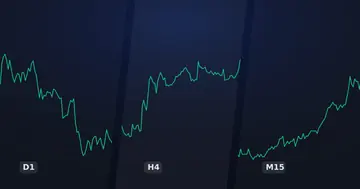
The same market shown side by side in three timeframes: M15, H1 and D1

Chart timeframes: from M1 to D1 and which to pick

A timeframe is nothing more than the length of one candle — yet it decides how often you trade, how much time you spend at the chart and which cost eats into the result. Here is how M1 to D1 differ in practice.

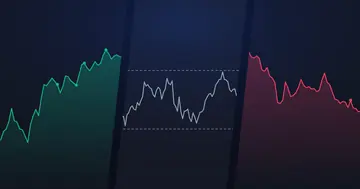
Three states of the market side by side on a price chart: an uptrend, a sideways range and a downtrend

How to spot a trend on a chart: forex, commodities

Higher highs and higher lows look the same on a currency pair, on oil and on the S&P 500. How to tell an uptrend, a downtrend and a range apart, and how to check the trend without drawing a single line.

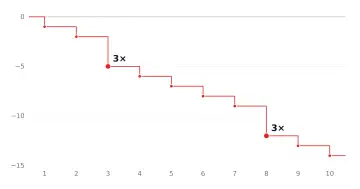
Cumulative swap over ten trading nights, the Wednesday night charged triple

CFD rollover and swap: what a night costs

The swap is interest for the night, the rollover a switch of futures contract. Why Wednesday counts three times and why the weekend is never free.

Nine Gann rays with their ratios and angles, the 1×1 ray highlighted

Gann angles: why 1×1 depends on your chart scale

Gann line, fan and grid: how the 1×1 ratio works, why eight of the nine famous angles are rounded arctangents, and what happens when two traders open the same chart on different scales.

Golden cross — the SMA 50 moving average crosses above the SMA 200

Golden Cross: How the 50/200 Signal Really Works

A golden cross appears when the 50-day moving average crosses above the 200-day one. Here is how to set the chart up, how to tell a clean crossover from a false one, and what the S&P 500 data from CXO Advisory, Carson Group and Bank of America says about what follows.

What hedging is and how to use it

What hedging is and how to use it

A hedge does not get you a better price, it gets you a certain one. When a lock makes sense, what it costs and when it only delays a loss.

uncrewed reconnaissance aircraft on an airfield apron at dusk

Defense stocks sorted by what the companies build

Defense stocks sorted by what the companies actually build. Drones, underwater robots, aircraft, ground vehicles, electronics and services are six different businesses carrying different risks.

Dark cover image with EBITDA multiplier lettering over several stacked transparent glass panes.

EBITDA multiple: enterprise value, not share price

The EBITDA multiple gives the value of the whole business, the lenders' share included. Only once net debt comes off does it turn into a per-share figure — a gap of 80 percent between two otherwise identical companies.

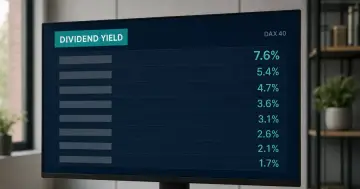
Table of DAX dividend yields, highest value 7.6 percent

German dividend stocks: yields and withholding

German companies pay once a year, after the annual general meeting. Germany withholds 26.375 percent of the gross amount, and the highest yields in the table belong to carmakers that are cutting the dividend.

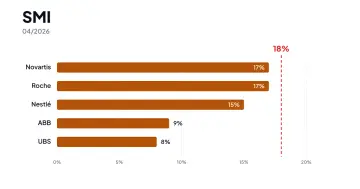
Bar chart of the weights in the SMI index with the 18% cap on a single company marked

Swiss Stock Exchange (SIX Swiss Exchange)

How the SIX Swiss Exchange came about, why it was the first in the world to automate trading, clearing and settlement in one system, and which companies weigh the most in the SMI.

Quotation marks with the names Graham, Buffett, Lynch, Bogle, Templeton and Keynes

Quotes about money, investing and trading

The best-known quotes about money and investing with a documented source and context, including the ones Einstein, Rothschild and Twain never said.